The short answer
A shower filter with a documented free chlorine claim can reduce free chlorine. To soften hard water, you need treatment that lowers dissolved calcium and magnesium. Those minerals cause scale, and a chlorine reduction claim provides no evidence of hardness reduction. Start by checking the hardness of your water and identifying what you want to change at the shower. Penn State Extension’s guide to water softening and NSF’s shower filter directory
Check whether the problem is scale, odor, or a change in spray
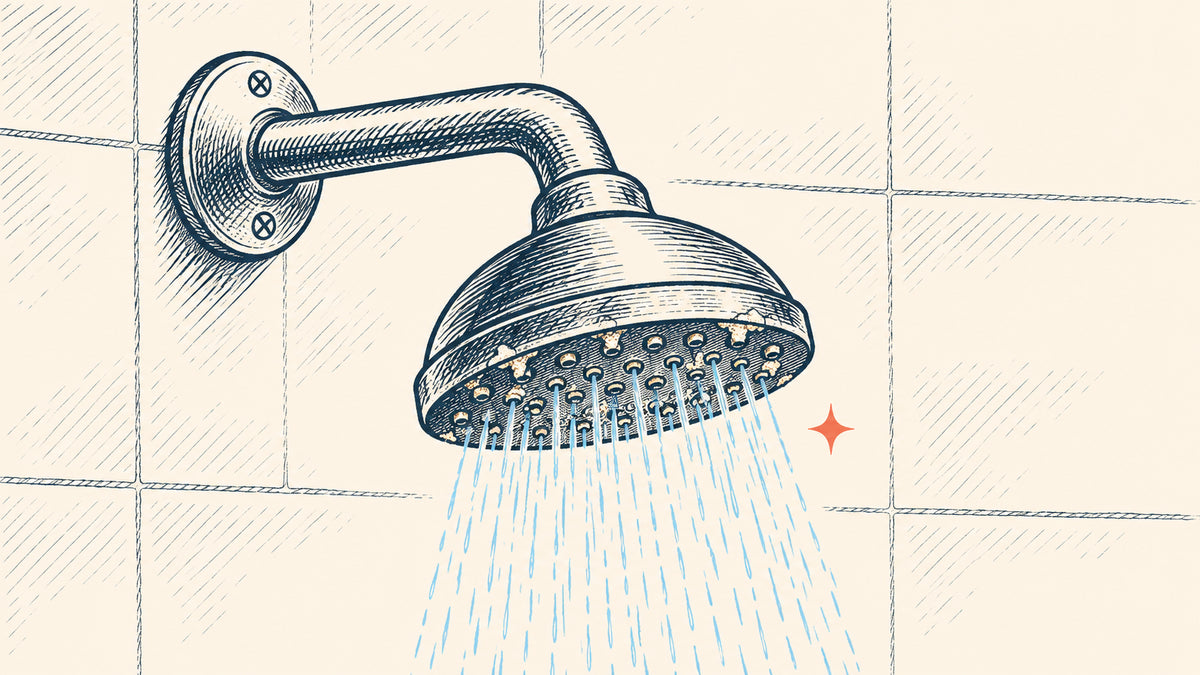
White, chalky deposits around the showerhead and on fixtures are a reason to check for hardness. If similar deposits show up at multiple taps or in the kettle, ask your utility for its typical hardness, or arrange a test for your home. If you use a private well, ask the testing lab to include hardness when you request an analysis. Keep the value and the units together so you can compare the result with equipment specifications. Penn State Extension’s guidance on scale and hardness testing
A chlorine-like smell leads to a different question. Ask the utility whether it uses free chlorine or chloramine, including whether that changes seasonally. If the shower spray gets uneven, inspect the showerhead and check its cleaning instructions before buying treatment. Cleaning a fixture deals with deposits already there. Treating the water addresses the supply that runs through it afterward. CDC guidance on chlorine and chloramine
Match the treatment to your goal
| Concern | What to check | Next step |
|---|---|---|
| Recurring chalky scale | Water hardness and where the deposits appear | Clean existing deposits as the fixture maker directs. If you want to lower hardness, compare treatment with a documented hardness reduction claim. |
| Free chlorine odor | Utility disinfectant and the exact filter’s free available chlorine claim | Compare certified shower models at their rated flow and service cycle. |
| Utility uses chloramine | Evidence for chloramine at the model’s shower operating conditions | Treat free chlorine reduction as a separate claim. Ask the manufacturer for chloramine-specific evidence. |
| Build-up at just one showerhead | Fixture condition and the maker’s cleaning instructions | Check whether cleaning restores the spray before adding a cartridge. |
Read a shower filter listing before you buy
NSF lists shower filters under NSF/ANSI 177, an aesthetic-effects standard. In the official directory, look for the model number, replacement element, listed flow, service cycle, and the words “Free Available Chlorine Reduction.” The listing describes a specific configuration. Check whether the replacement cartridge you can buy is the one the directory names. A materials or lead-content listing concerns what the fixture is made of. Look for a separate reduction claim if you want evidence about what the filter changes in the water. NSF’s official shower filter listings
Then read the installation and use instructions. Check the fit at the shower arm, clearance for the filter and showerhead, and the permitted temperature and pressure. If you use a handheld shower or combined outlets, check that your setup is supported. Follow the manufacturer’s startup and replacement instructions. Example shower filter installation and care manual
What to do when your water really is hard
For a homeowner with measured hardness and recurring deposits throughout the home, an ion-exchange softener is an option to lower calcium and magnesium on the lines it serves. Ask an installer whether those lines include the shower’s hot and cold supplies, and whether the rated capacity and service requirements suit the household. For a renter with a single affected fixture, start with the fixture maker’s cleaning instructions and bring recurring scale or flow problems to the property manager. Penn State Extension’s explanation of ion exchange and Dipper’s guide to planning softener and filter coverage
If a product promises less scale, ask what was measured. A test of deposits on a surface answers a different question from a test of dissolved calcium and magnesium. For actual softening, ask for evidence of lower water hardness at the intended flow and over the stated service interval. Dipper’s guide to hardness and scale treatment
Consider drinking-water filtration at the kitchen tap
Bathroom scale and kitchen drinking-water concerns call for their own checks. If you also want to filter the water you drink and cook with, identify the substance to address and verify the exact filter’s reduction information. The Dipper Headwater uses an under-sink carbon block on the cold line to your existing kitchen faucet. Its installation guide shows which connections the system needs. Headwater installation guidance
Questions about shower filters and hard water
Will a shower filter remove white spots from my glass door?
Follow the door manufacturer’s cleaning instructions for spots already there. To address new deposits that come from hardness, first confirm your water’s hardness and choose treatment with evidence that it lowers the dissolved minerals.
How long does a shower filter cartridge last?
Use the replacement schedule for the exact model and check its listed service cycle. For example, a hypothetical 2,400-gallon rating and 20 gallons of daily use would put the volume limit at about 120 days. If the manual calls for earlier replacement, follow that schedule. NSF listings with model-specific service cycles